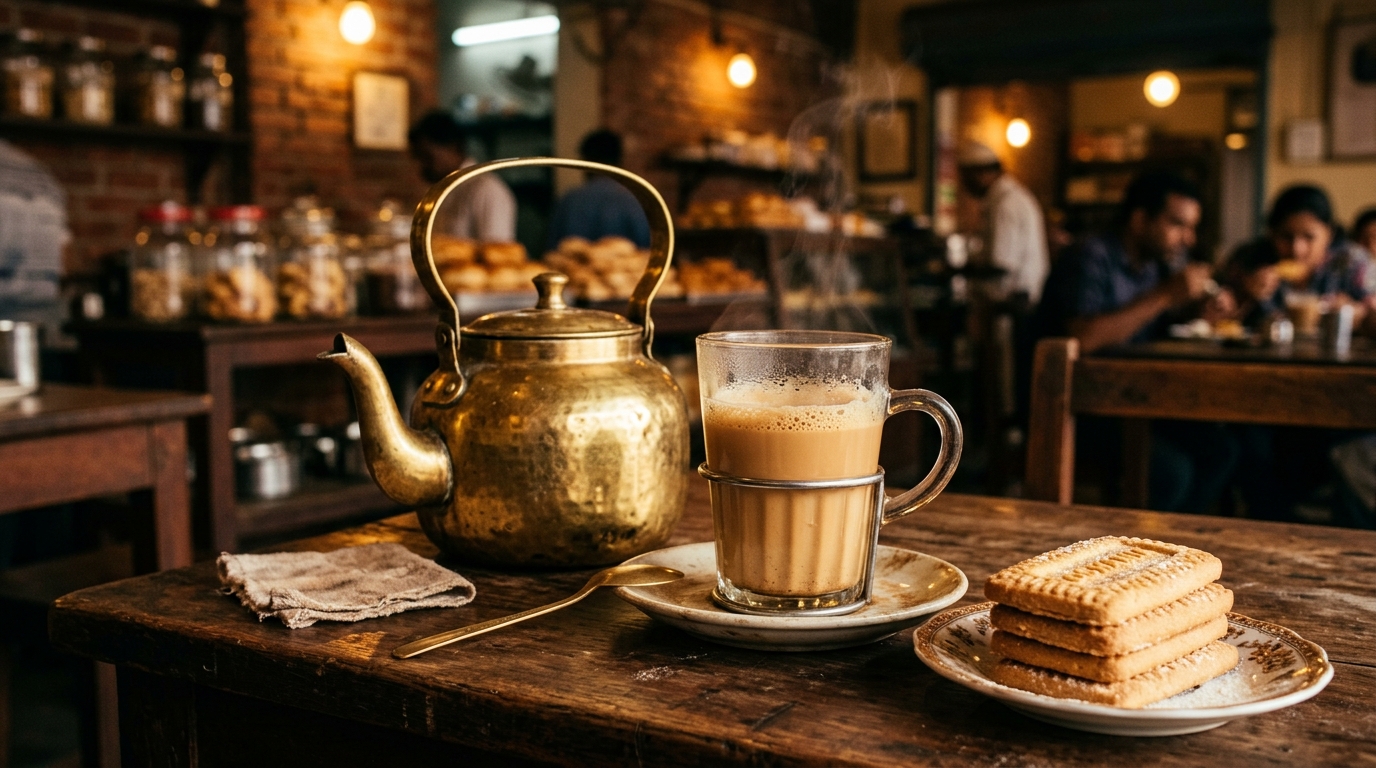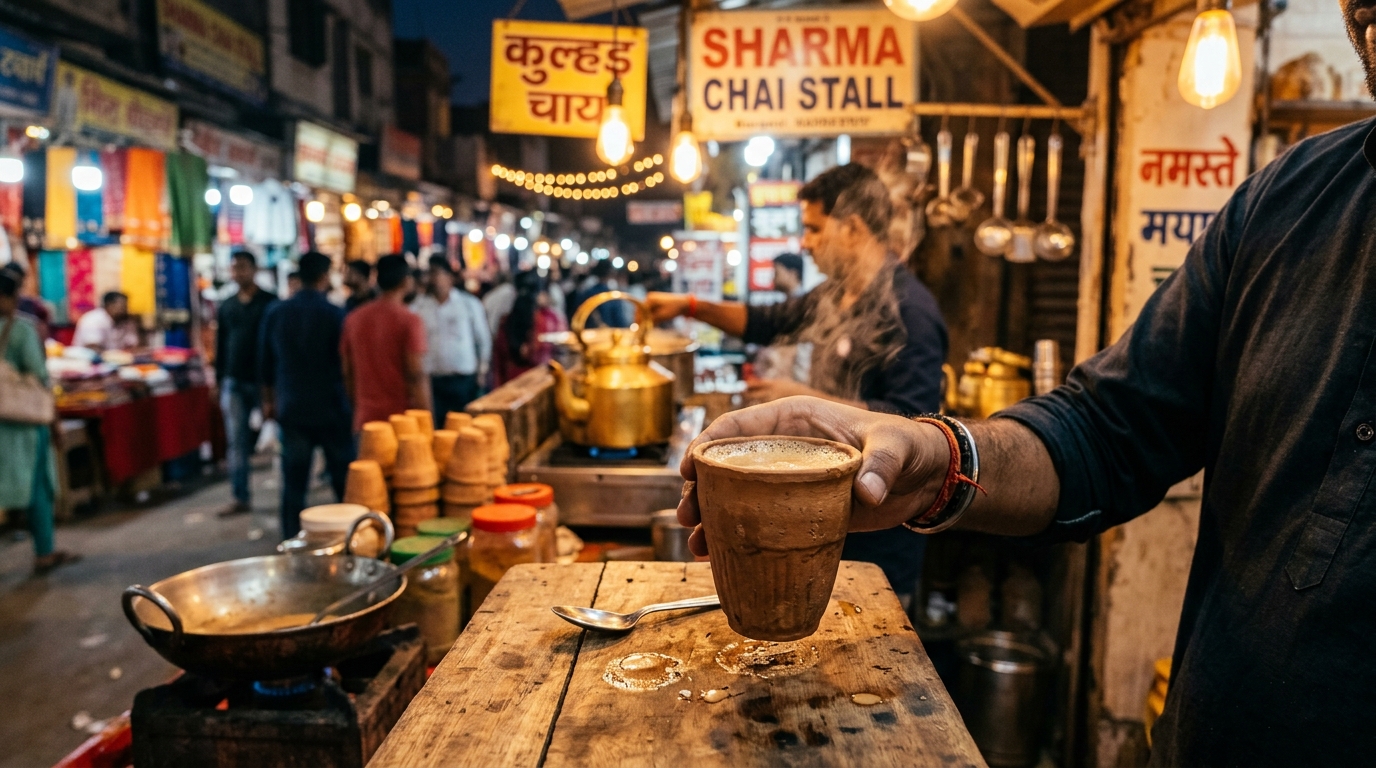
There's a very specific kind of joy in holding a small, rough clay cup of hot tea, feeling its warmth through your palms while the outside stays cool enough to hold comfortably. That's the magic of kulhad cha, tea served in a handmade, unglazed clay cup that's been part of Indian tea culture for as long as anyone can remember.
What Exactly Is A Kulhad?
A kulhad is a small, disposable clay cup, shaped by hand on a potter's wheel from local clay and left to air dry rather than glazed or fired to a shine. This unglazed, slightly porous surface is exactly what makes kulhad cha taste different from tea served in any other cup. It absorbs a tiny amount of the tea while releasing a subtle earthy note back into it, an aroma that's impossible to replicate with steel, ceramic, or plastic.
The Railway Platform Connection
Ask anyone who grew up travelling by train in North India, and they'll tell you about the sound of vendors calling out "chai, kulhad wali chai" as they walk the length of the platform. For decades, the kulhad has been inseparable from the experience of Indian train travel, so much so that Indian Railways has, at various points, actively promoted kulhads as the standard serving vessel at major stations, partly for the flavour and partly for hygiene, since each cup is used only once.
A Naturally Sustainable Choice
- Kulhads are fully biodegradable and return to the earth after use
- They support local potters and a centuries-old craft
- Being single-use, they avoid the need for washing and reuse of shared cups
- No plastic lining or chemical coating touches the tea
Long before "eco-friendly packaging" became a marketing buzzword, kulhads were already solving the problem sustainably, made from natural clay, used once, and simply broken or left to disintegrate afterward. It's a beautifully simple system that modern paper and plastic cups still struggle to match.
Ask anyone who grew up near a railway platform: chai never quite tastes the same once you leave the kulhad behind.
Why It's Making A Comeback
In recent years, kulhads have found their way back into modern cafés and tea stalls looking to bring a sense of nostalgia and authenticity to their menu. It's usually the same familiar kadak masala cha recipe, just poured into clay instead of ceramic, and most people notice the difference from the very first sip.
How Kulhads Are Actually Made
The process is refreshingly simple and largely unchanged for centuries. A potter takes a lump of local clay, centres it on a manually spun wheel, and shapes it into a small cup in a matter of seconds using nothing but hands and a few basic tools. The freshly shaped kulhads are then left out in the sun to air dry for a day or two, never glazed and rarely fired in a kiln the way decorative pottery is. This rough, unfinished quality is intentional, it's exactly what gives the clay its porous, flavour-absorbing character.
Kulhad Cha In Modern India
Beyond railway stations, kulhads have found a second life in urban cafés and even some coffee shop chains looking to offer something more rooted in local tradition. Wedding caterers and event planners frequently use kulhads for chai counters, leaning into the nostalgia factor for guests. Some ice cream and lassi vendors have adopted the same clay cups too, extending the kulhad's appeal well beyond tea alone.
Kulhad vs Plastic And Paper Cups
- Plastic cups can leach chemicals into hot liquids and take centuries to break down
- Paper cups are often lined with plastic, making them harder to recycle than they appear
- Kulhads return fully to the earth, leaving no lasting waste behind
- Kulhads also support a traditional livelihood that machine-made cups don't
The environmental case for kulhads has become even stronger in recent years as awareness around single-use plastic has grown. Indian Railways has periodically pushed for a wider return to kulhads specifically for this reason, alongside the added benefit of a genuinely better-tasting cup of tea.
Frequently Asked Questions
Are kulhads hygienic?
Yes, in fact more so than shared cups. Since each kulhad is used only once and then discarded or broken, there's no risk of cross-contamination from reused, poorly washed cups, a genuine hygiene advantage over steel or ceramic alternatives at busy stalls.
Why does the tea taste earthy in a kulhad?
The unglazed clay is slightly porous and absorbs a small amount of the tea while releasing a subtle earthy note back into it, a natural chemical interaction that ceramic, steel, or plastic simply can't replicate.
Can kulhads be reused?
They're designed to be single-use and are typically broken or discarded after one serving, which is part of what makes them both hygienic and biodegradable.