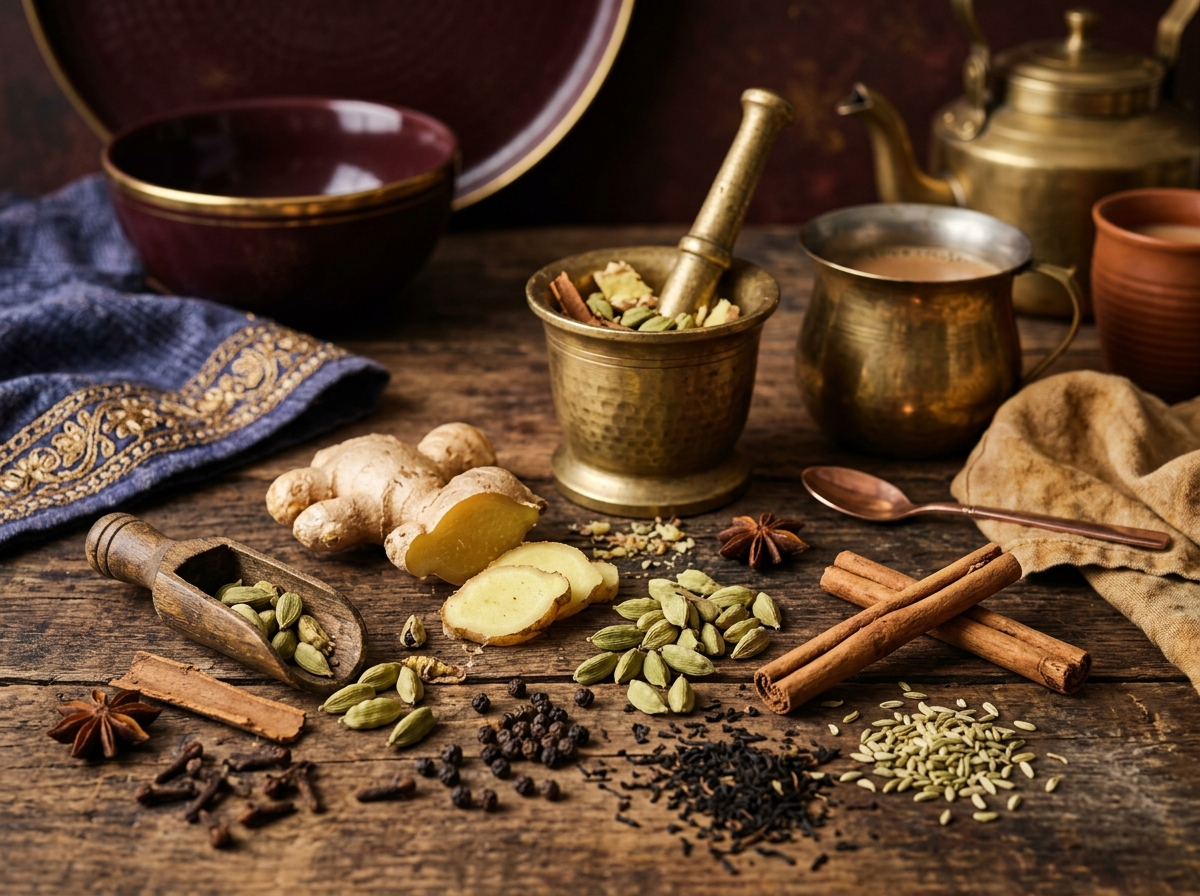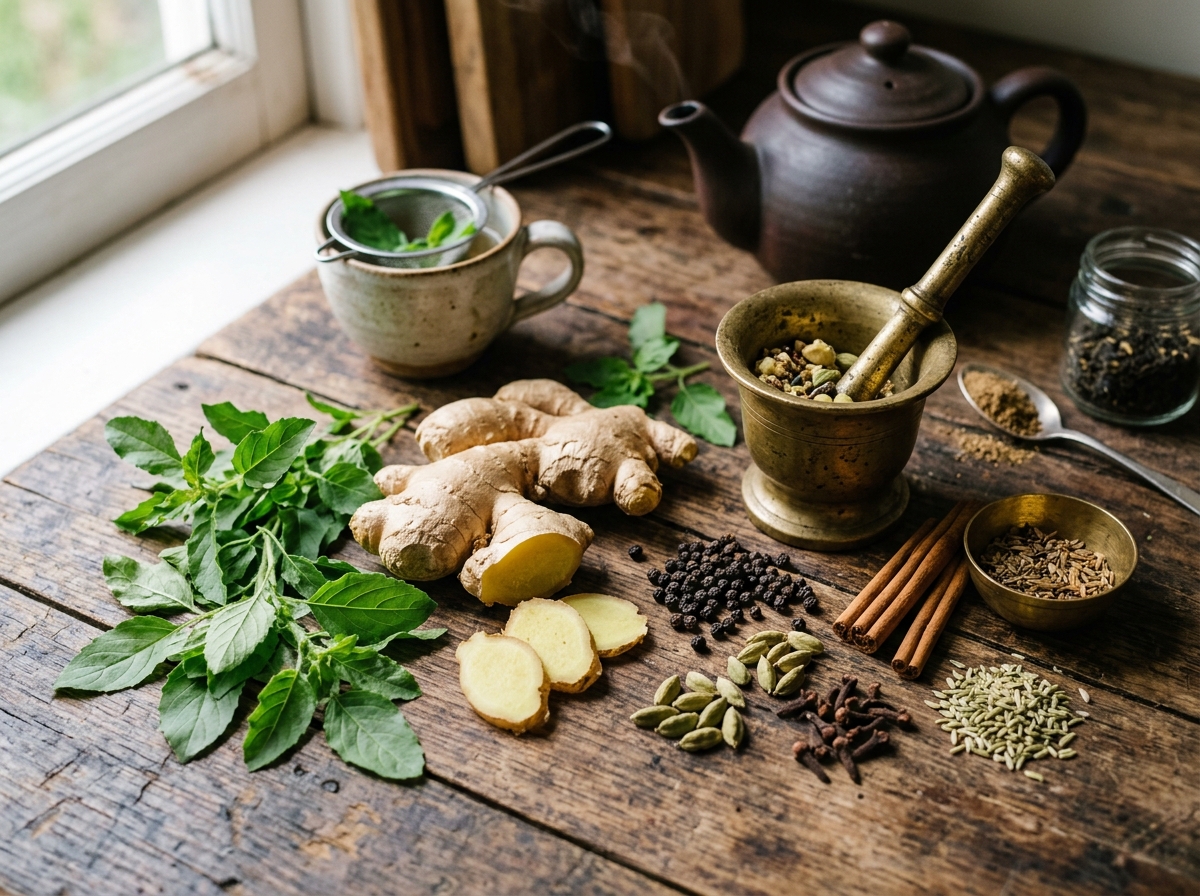
Long before "immunity boosters" became a shelf full of supplements, Indian households already had one growing in the courtyard: the tulsi plant. Paired with ginger, this simple caffeine-free tea has been the go-to home remedy for generations whenever a cold, cough, or seasonal sniffle starts creeping in.
Why Tulsi And Ginger Work So Well Together
Tulsi (holy basil) is believed in Ayurveda to help the body adapt to stress and support respiratory health, while ginger brings natural anti-inflammatory compounds and a warming quality that soothes the throat. Together, they create a tea that feels genuinely medicinal without tasting unpleasant, mildly peppery from the tulsi, warm and slightly spicy from the ginger.
Ingredients You'll Need
- 2 cups water
- 8-10 fresh tulsi (holy basil) leaves
- 1 inch fresh ginger, crushed
- 2-3 cloves
- 1 small cinnamon stick (optional)
- Honey, to taste
Step-by-Step Recipe
Bring the water to a boil with the crushed ginger, cloves, and cinnamon, letting it simmer for 3-4 minutes to release the spices' oils.
Add the fresh tulsi leaves and let the mixture simmer for another 2-3 minutes, until the water takes on a light golden colour.
Strain into cups, let it cool for a minute, then stir in honey to taste. Avoid adding honey while the tea is still boiling hot, as high heat can destroy some of its natural enzymes.
A cup of ginger-tulsi cha is often the first, and sometimes the only, remedy an Indian household reaches for at the first sign of a cold.
Health Benefits
- Tulsi has natural antibacterial and antiviral properties
- Ginger helps ease nausea, bloating, and sore throats
- Cloves act as a natural decongestant
- Honey soothes the throat and adds antimicrobial benefits
- Completely caffeine-free, safe to drink any time of day
When To Drink It
Because it's naturally caffeine-free, ginger-tulsi cha is one of the few teas that works just as well at night as it does in the morning. Many households make a fresh pot at the first sign of a cough, drinking it two to three times a day until symptoms ease.
The Science Behind The Remedy
Tulsi (Ocimum sanctum) contains compounds like eugenol, which has been studied for its anti-inflammatory and antimicrobial properties, while ginger's active compound, gingerol, is well documented for easing nausea and reducing inflammation. Cloves add their own contribution in the form of eugenol as well, which is part of why clove oil has long been used as a natural remedy for toothaches and sore throats. Together, the combination gives the tea a genuinely functional edge beyond just tasting good.
Variations You Can Try
- Add a few mint leaves for a cooling, refreshing twist
- A pinch of black pepper boosts the warming effect further
- A squeeze of lemon juice after straining adds vitamin C and brightness
- Swap honey for jaggery for a more traditional, earthy sweetness
- Add a small piece of turmeric for extra anti-inflammatory benefits
Make-Ahead And Storage Tips
If you want the tea ready to go without brewing fresh each time, boil a concentrated batch of the water, ginger, cloves, and cinnamon (without the tulsi leaves) and refrigerate it for up to 3 days. When you're ready for a cup, reheat the concentrate, add fresh tulsi leaves, and simmer for just a minute or two before straining. Adding the tulsi fresh each time preserves more of its flavour and beneficial compounds compared to storing it already brewed.
Ginger-tulsi cha isn't meant to replace a doctor, but as a first line of comfort at the very first sniffle, Indian households have trusted it for generations.
Frequently Asked Questions
Can children drink ginger-tulsi cha?
In small, mild quantities, yes, many Indian households give children a diluted version when they have a cold. Keep the ginger and cloves light, and always check with a paediatrician for infants or if symptoms persist.
How many cups a day is safe?
Two to three cups a day is a common, safe amount for most adults. As with any herbal remedy, moderation is key, and it shouldn't replace medical treatment for serious or lingering illness.
Does it actually cure a cold?
It doesn't cure a cold, but it can genuinely help ease symptoms like a sore throat, congestion, and general discomfort while your body fights off the infection naturally.